
Last updated September 25, 2026
Non-destructive entry first, always - and we re-key Schlage, Kwikset, and Baldwin locks on the spot while you watch
You get a price before we start. It does not change when we arrive. No surprises.
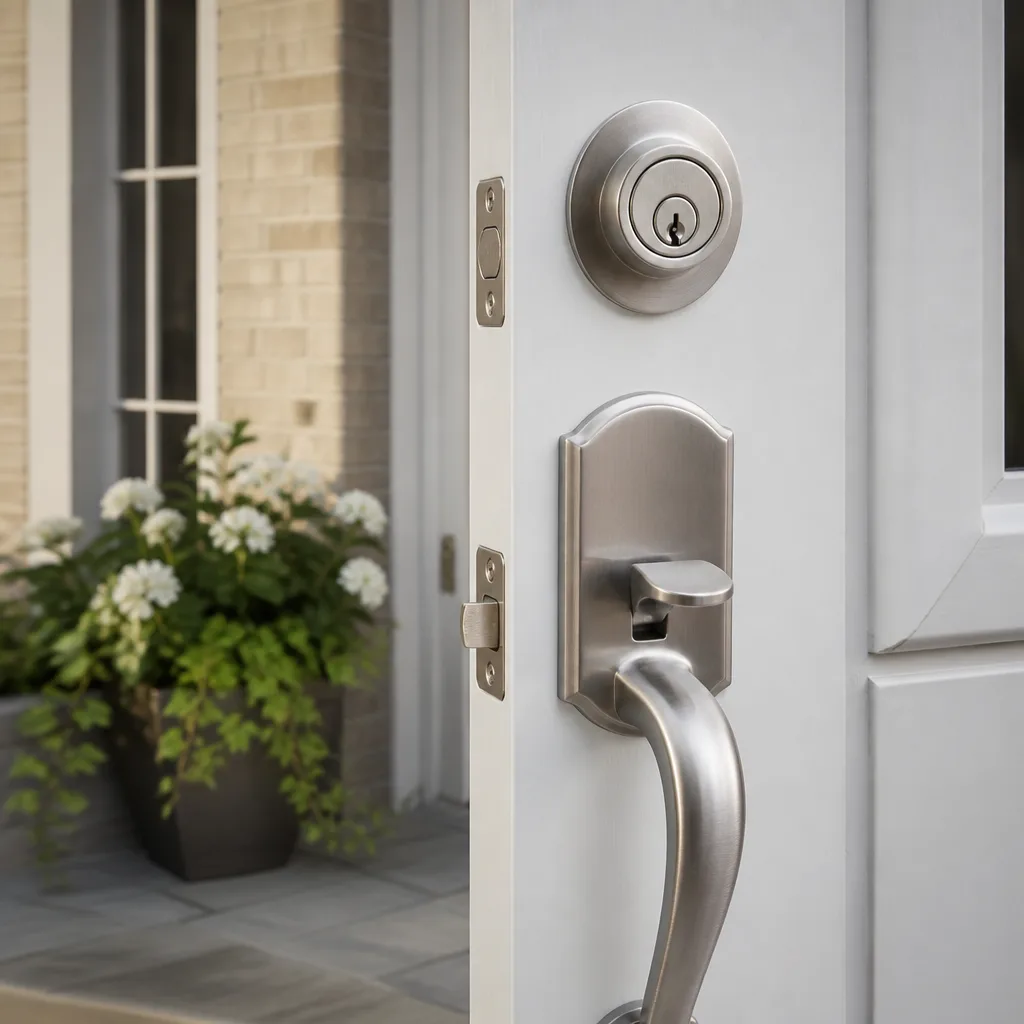
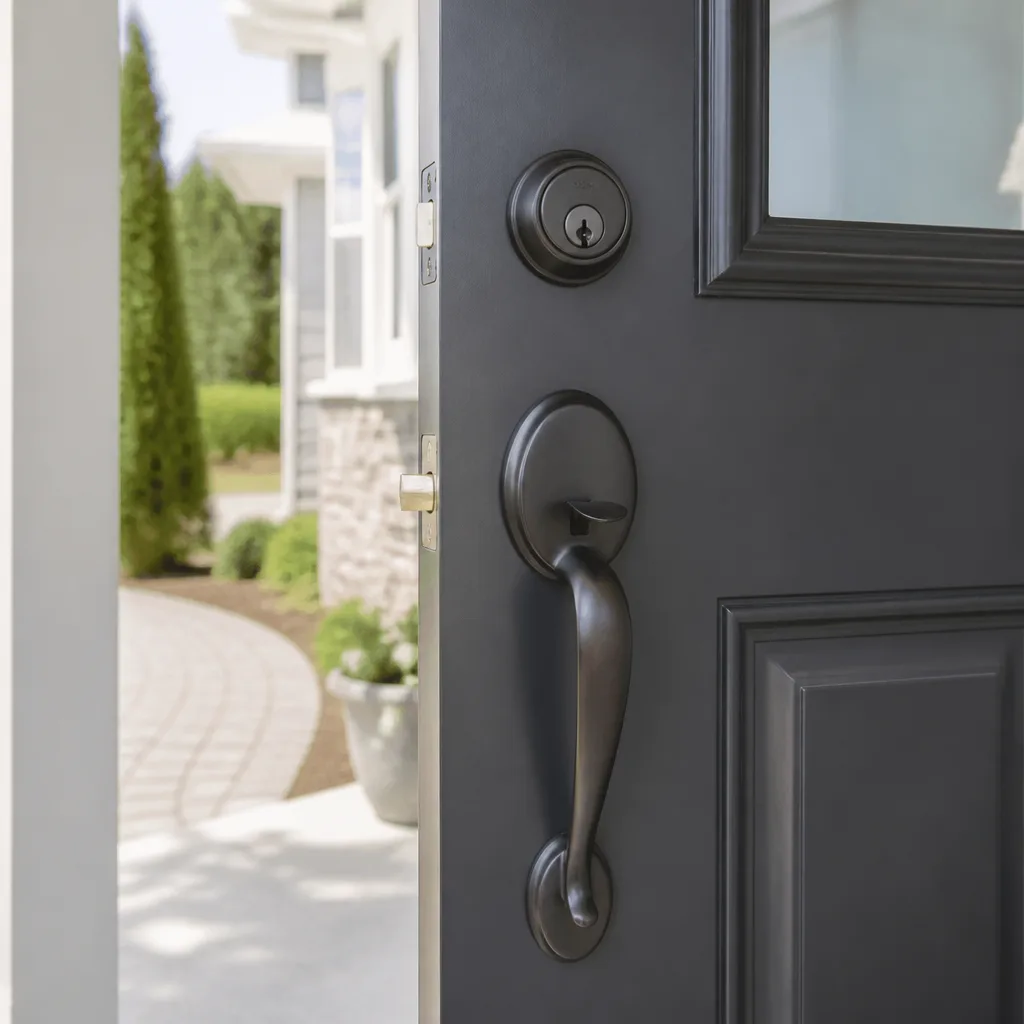
Locksmith Cost Breakdown: The Manhattan Homeowner’s Reference for 2026
The service call fee - the charge that exists before a single tool is touched - ranges from $35 to over $150 in Manhattan depending on the operator, and it is almost never disclosed unprompted. That single line item is where most invoice surprises begin. In a market where a locked-out tenant on the Upper West Side and a property manager in Tribeca may pay radically different rates for the same fifteen-minute job, understanding the component structure of a locksmith invoice is the most reliable protection against inflated pricing. This guide names every cost category with 2026 Manhattan market figures, explains how lock grades and security levels affect hardware pricing, and shows how to read a quote the way a technician writes it. For Locksmith Warning Signs: A Manhattan Homeowner’s Reference Guide, see our companion resource.
Quick Answer
A standard residential locksmith service in Manhattan in 2026 typically costs $150-$400 for common jobs: lockout service runs $150-$250, rekeying $20-$40 per cylinder, and lock replacement $120-$350 per door depending on hardware grade. Emergency and after-hours calls add 50-100% to labor rates. The total invoice always breaks into four categories: service call fee, labor time, parts, and any emergency differential.
Table of Contents

- The Four Cost Categories on Every Legitimate Locksmith Invoice
- Lock Grade and Cost: When Grade 1 Is Overselling
- Rekeying vs. Lock Replacement: The Labor Time Difference
- High-Security Cylinder Pricing: Medeco, Mul-T-Lock, and Abloy
- How to Read a Parts Markup
- Manhattan Market Factors: What Drives Local Pricing
- How to Read a Locksmith Quote Before You Sign
- Common Mistakes to Avoid
- When to Call a Professional
- Frequently Asked Questions
The Four Cost Categories on Every Legitimate Locksmith Invoice
Every legitimate locksmith invoice in Manhattan contains the same four line items, though the dollar amounts vary widely. Understanding each category lets you compare quotes accurately and spot irregularities before a technician arrives.
1. Service Call Fee
The service call fee covers dispatch and travel time. In Manhattan, this ranges from $35 to $150 depending on the company structure and time of day. National call-center operations with subcontracted technicians often quote low service call fees ($35-$65) but recoup margin through inflated labor or parts. Established local shops with employed technicians typically charge $75-$125, reflecting Manhattan parking costs, tolls, and the reality that a truck sitting in Midtown traffic for forty minutes earns nothing during that time.
At Novak Lock & Security Manhattan home, our service call fee is quoted as a single flat rate that includes travel to any Manhattan address. Haven Standard Clause 1: the price on the phone is the price on the invoice.
2. Labor Rate
Labor is billed either by the hour or by the job. Manhattan residential locksmith labor in 2026 runs $85-$150 per hour for standard business hours. Flat-rate pricing for common jobs is increasingly common: lockout service $150-$250, rekey $20-$40 per cylinder, lock installation $80-$150 per door. Flat rates protect both parties - the customer knows the ceiling, and the technician isn’t penalized for efficiency.
After-hours labor (typically 6 PM to 8 AM weekdays, all weekend) carries a 50-100% premium. A 2 AM lockout on a Saturday in the East Village will run $225-$400 in labor alone. Holiday differentials (New Year’s Eve, Thanksgiving) may add another 25-50%.
3. Parts Cost
Hardware pricing varies by grade, brand, and security level. A basic entry-grade deadbolt (Kwikset, Defiant) retails for $25-$45; a Grade 2 commercial-spec deadbolt (Schlage B-series, Sargent 487) runs $65-$140; high-security cylinders (Medeco, Mul-T-Lock, Abloy) start at $180 and exceed $400 for restricted-keyway systems with patented key control.
Industry-standard parts markup is 15-30% over distributor cost. A locksmith charging $90 for a deadbolt that retails at $75 is within normal range. Charging $180 for the same item is not.
4. Emergency/After-Hours Differential
This is a separate surcharge, not folded into labor, on some invoices. It ranges from $50-$150 and applies to calls outside standard hours. Reputable locksmiths disclose this when you call; others add it silently. Always ask: “Is this rate for standard hours, and what changes after hours?”
| Category | Standard Hours | After-Hours/Emergency |
|---|---|---|
| Service Call Fee | $35-$125 | $75-$150 |
| Labor (hourly) | $85-$150/hr | $130-$300/hr |
| Basic Deadbolt (parts) | $25-$90 installed | Same parts, higher labor |
| Rekey per Cylinder | $20-$40 | $35-$75 |
| Lockout Service (total) | $150-$250 | $225-$400 |
Lock Grade and Cost: When Grade 1 Is Overselling
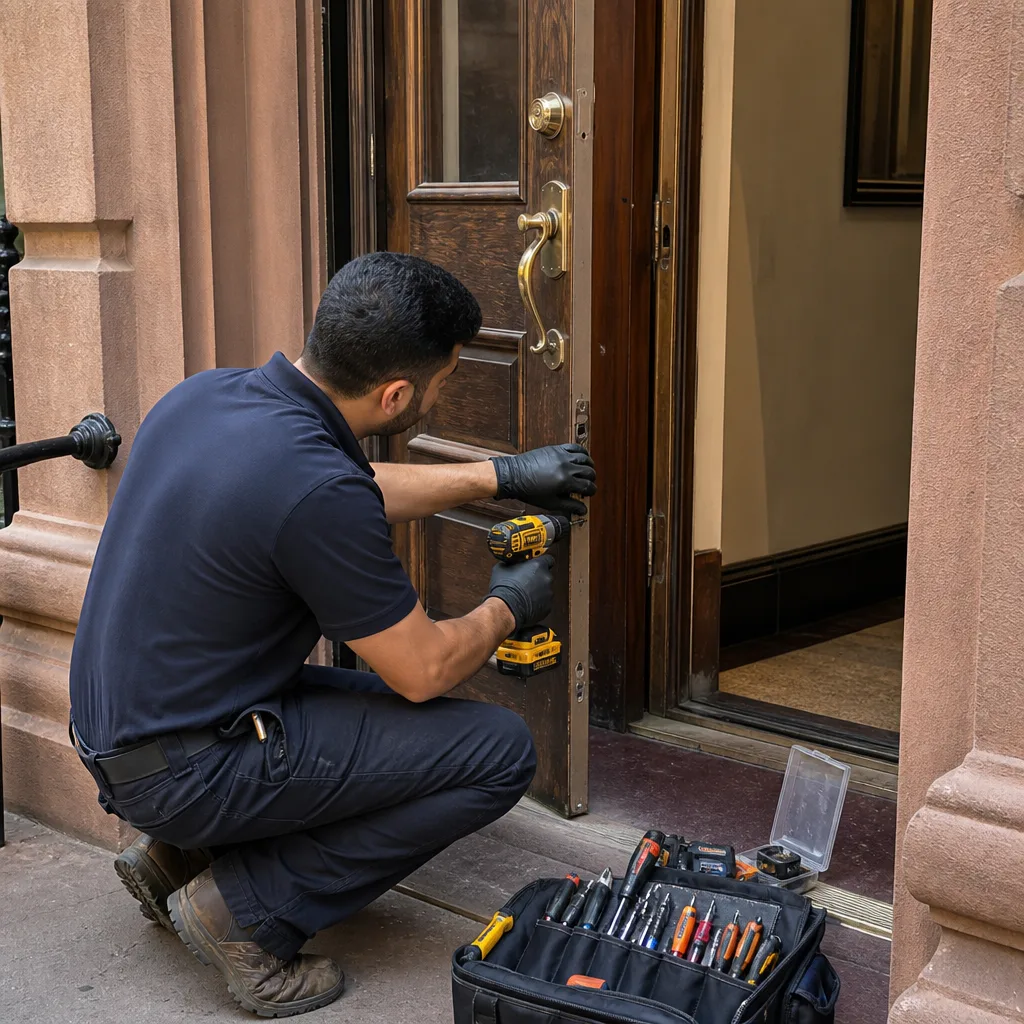
The American National Standards Institute (ANSI) grades locks by cycle testing and forced-entry resistance. Grade 1 withstands 800,000 cycles and ten door strikes; Grade 2 withstands 400,000 cycles and five strikes; Grade 3 withstands 200,000 cycles and two strikes. These grades are printed on the packaging and often stamped on the lock face.
Grade 1 hardware costs 40-80% more than Grade 2. A Grade 1 commercial lever set may run $180-$320; the equivalent Grade 2 is $95-$170. For a residential front door with daily family traffic, Grade 2 is sufficient. Grade 1 belongs on commercial high-traffic entrances, not on interior bedroom doors.
We have found Grade 1 hardware oversold in Manhattan pre-war buildings where the door frame itself is the weak point. A Grade 1 deadbolt in a softwood frame with a shallow strike plate is security theater - the lock outlasts the jamb by a wide margin. In these cases, we recommend Grade 2 hardware with a reinforced strike and longer screws into the framing, at roughly half the hardware cost.
For residential locksmith in Manhattan work, we specify the grade on every quote. If a competitor quotes “premium deadbolt installation” without naming the grade, ask directly. The answer reveals whether you’re buying hardware or buying an adjective.
Rekeying vs. Lock Replacement: The Labor Time Difference
Rekeying changes the internal pin configuration so existing keys no longer operate the lock. Replacement removes the entire lock body and installs new hardware. The correct choice depends on the lock’s condition, your security needs, and the cost structure of each option.
When Rekeying Is Correct
- The existing lock is functional and properly aligned
- The hardware grade matches your security requirements
- You need to invalidate old keys (move-in, lost key, staff change)
- The lock body is not damaged or corroded
Rekeying labor is 10-20 minutes per cylinder for a standard pin-tumbler lock. In Manhattan, we quote $20-$40 per cylinder for residential rekeying, with a minimum trip charge that covers the first two cylinders. A typical post-purchase rekey for a two-bedroom co-op - front door, two bedroom doors, one bathroom - runs $140-$220 total.
When Replacement Is Necessary
- The lock is Grade 3 or ungraded builder hardware with known defects
- The bolt does not extend fully or binds in the strike
- The keyway is worn, permitting keys to insert at multiple angles
- You are upgrading to high-security or smart lock functionality
- The existing hardware is mismatched or non-functional
Replacement labor runs 30-60 minutes per door, including removal, door prep adjustment, installation, and testing. The invoice shows higher labor ($80-$150) plus parts. Total per-door cost: $120-$350 for standard hardware, $300-$700 for high-security or electronic locks.
In Manhattan’s pre-war housing stock, we regularly find mortise locks with worn hubs or incompatible backsets that make simple replacement impossible without door modification. We document this condition with photos, include the modified scope in writing, and proceed only after customer approval. Haven Standard Clause 3: no work begins without written authorization of the final scope.
High-Security Cylinder Pricing: Medeco, Mul-T-Lock, and Abloy
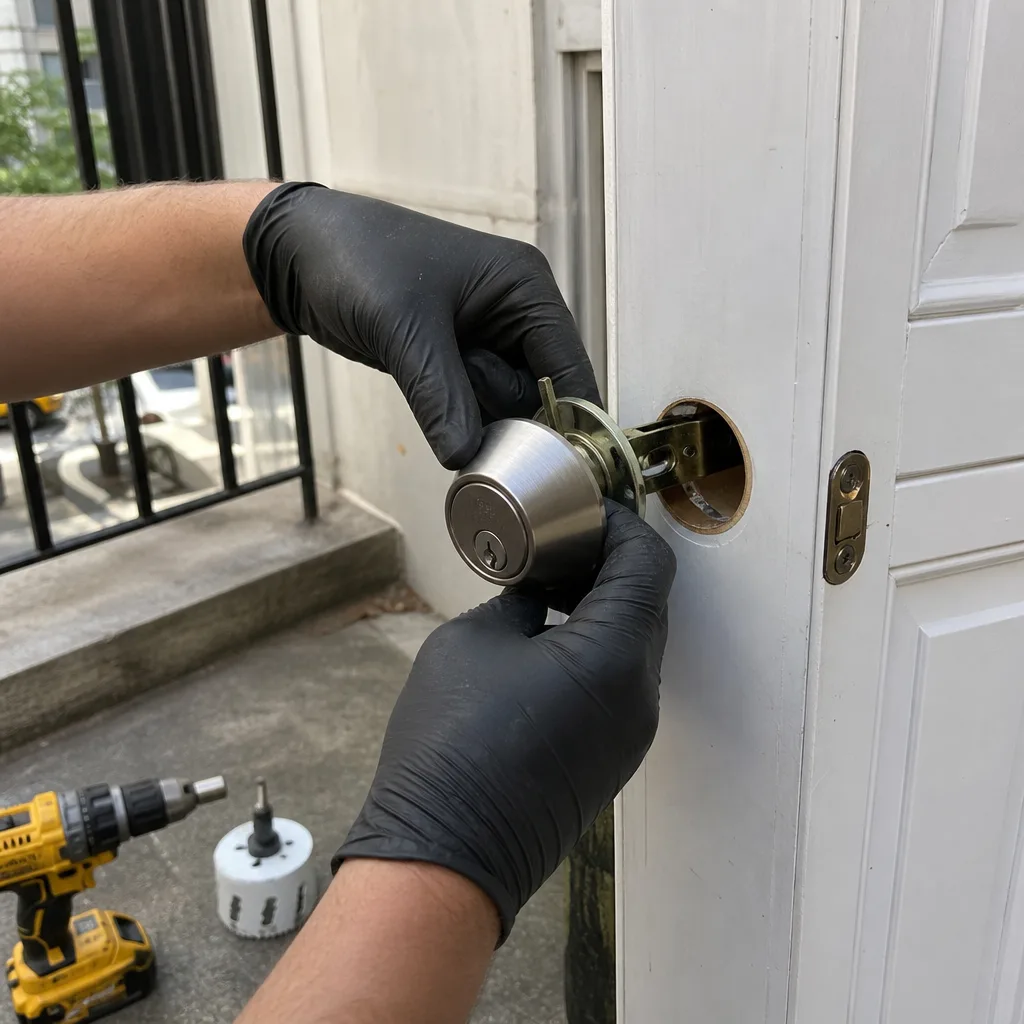
High-security cylinders are distinguished by two features: pick resistance and key control. Standard pin-tumbler locks can be picked with commercially available tools in seconds to minutes. High-security cylinders use sidebar mechanisms, rotating pins, or dimple keyways that resist conventional picking and bumping attacks. Key control means patented key blanks that cannot be duplicated at a hardware store - only by authorized dealers with signature verification.
These features carry substantial cost premiums:
- Medeco Classic/Maxum: $180-$280 per cylinder. Rotating pin design, UL 437 listed for pick resistance, key control through authorized dealer network. Common in Manhattan commercial buildings and upscale residential conversions.
- Mul-T-Lock Interactive+: $200-$320 per cylinder. Telescoping pin-in-pin system with interactive element. Strong key control; popular in new development condos where management retains master key systems.
- Abloy Protec2: $250-$420 per cylinder. Rotating disc mechanism, no springs to wear or corrode. Exceptional pick resistance; the premium choice for coastal or high-humidity environments. We have installed Abloy on waterfront properties in Battery Park City where salt air accelerates corrosion in conventional pin-tumbler mechanisms.
The cost justification for high-security is not the lock itself but what it protects against. In Manhattan buildings with high tenant turnover, former occupants with unreturned keys, or Airbnb operations with multiple users, key control eliminates the risk of unauthorized duplication. The break-even calculation: if rekeying a standard lock twice costs more than one high-security installation with controlled keys, the premium hardware is the economical choice.
For commercial locksmith in Manhattan applications, we regularly specify Mul-T-Lock master key systems in multi-tenant buildings. The per-cylinder cost is higher, but the administrative control - one key for building access, separate keys for individual units, all non-duplicable - reduces rekeying frequency by 80% or more in typical rental properties.
How to Read a Parts Markup
Locksmiths purchase hardware through wholesale distributors at 30-50% below retail. Industry-standard markup is 15-30% over wholesale cost, yielding a final customer price at or slightly below retail for common items. A Schlage B60 deadbolt with a wholesale cost of $55 might be marked up to $70-$75 - still below the $85-$95 retail price at Manhattan hardware stores.
Markup becomes problematic when it exceeds 50% over wholesale or when generic hardware is sold at name-brand prices. We have reviewed competitor quotes where a $12 wholesale cylinder was invoiced at $45 with no brand identification.
How to Verify a Parts Price
- Ask for the manufacturer and model number on the quote
- Check retail pricing at a verified retailer (Home Depot, Lowe’s, or the manufacturer’s dealer locator)
- Expect locksmith pricing at or below retail for common items; premium for specialty or same-day availability is reasonable
- Question any part price exceeding 150% of verified retail
At Novak Lock & Security Manhattan, we list manufacturer, model, and our installed price on every quote. If a customer brings us a competitor’s written estimate, we provide a free second opinion - including parts price verification - under our standard service policy.
Manhattan Market Factors: What Drives Local Pricing

Manhattan locksmith pricing reflects geographic and regulatory realities that don’t apply in suburban or rural markets.
Parking and access time. A service call to a doorman building on Central Park West with loading dock access takes fifteen minutes less than the same call to a walk-up on Orchard Street with alternate-side parking restrictions. Some locksmiths absorb this variance; others bill it. Ask whether travel time is included in the service call or billed separately.
Building requirements. Many Manhattan co-ops and condos require certificate of insurance (COI) documentation, photo ID logging, and specific arrival windows. Compliance adds administrative time that affects scheduling and, indirectly, pricing. We maintain current COIs for all major Manhattan management companies; the cost is built into our flat-rate structure, not added as a line item.
Hardware availability. Same-day installation of specialty items - Baldwin mortise sets for landmark district requirements, Sargent hospital-grade levers for medical office conversions - requires local inventory or rapid courier service. Manhattan locksmiths with warehouse space pay $25-$45 per square foot monthly; that cost distributes across inventory carrying charges. A locksmith quoting next-day delivery on Baldwin hardware is either maintaining expensive inventory or marking up rush courier fees.
After-hours density. Manhattan’s 24-hour economy means after-hours calls are more frequent than in suburban markets, but technician availability is also more constrained. The 2 AM lockout in Hell’s Kitchen competes with the emergency call at the hospital on First Avenue. After-hours premiums reflect genuine scarcity, not opportunism - though the line between the two is thin in some operations.
How to Read a Locksmith Quote Before You Sign
A legitimate quote contains four elements. Anything less is incomplete; anything more requires explanation.
- Service address and scope: Exact location, number of locks, type of service (rekey, replace, repair, installation)
- Line-item pricing: Service call, labor (hours or flat rate), parts (manufacturer, model, quantity, unit price), any after-hours or emergency differential
- Total price with expiration: The exact amount you will pay, valid for a stated period (typically 30 days)
- Terms: Payment method, warranty terms, and what triggers additional charges (discovered damage, scope change, access issues)
Red flags in a quote: “plus materials” without estimate, “time and materials” without hourly cap, vague descriptions like “install premium lock” without manufacturer or grade, or any statement that the price “may change based on conditions.” Haven Standard Clause 1 prohibits this language entirely - the price quoted is the price invoiced, with no exceptions.
For access control systems in Manhattan, quotes require additional specificity: credential type (key fob, card, biometric), software licensing terms, integration requirements with existing building systems, and training scope. These projects are surveyed and scheduled, not dispatched for same-day completion.
Common Mistakes to Avoid
- Accepting a phone quote without written confirmation. Verbal estimates are unenforceable. A locksmith who won’t put the price in writing before dispatch is not operating under any standard we recognize.
- Assuming all “licensed” locksmiths carry the same credentials. New York City requires a locksmith license; verification is available through the NYC Department of Consumer Affairs. Ask for the license number and verify it. Unlicensed operation is a misdemeanor and voids any warranty claim.
- Paying for “emergency” service during standard hours. Some operators classify any same-day request as emergency. Standard hours are typically 8 AM to 6 PM weekdays. If you’re charged an emergency rate for a 10 AM Tuesday call, that rate is fabricated.
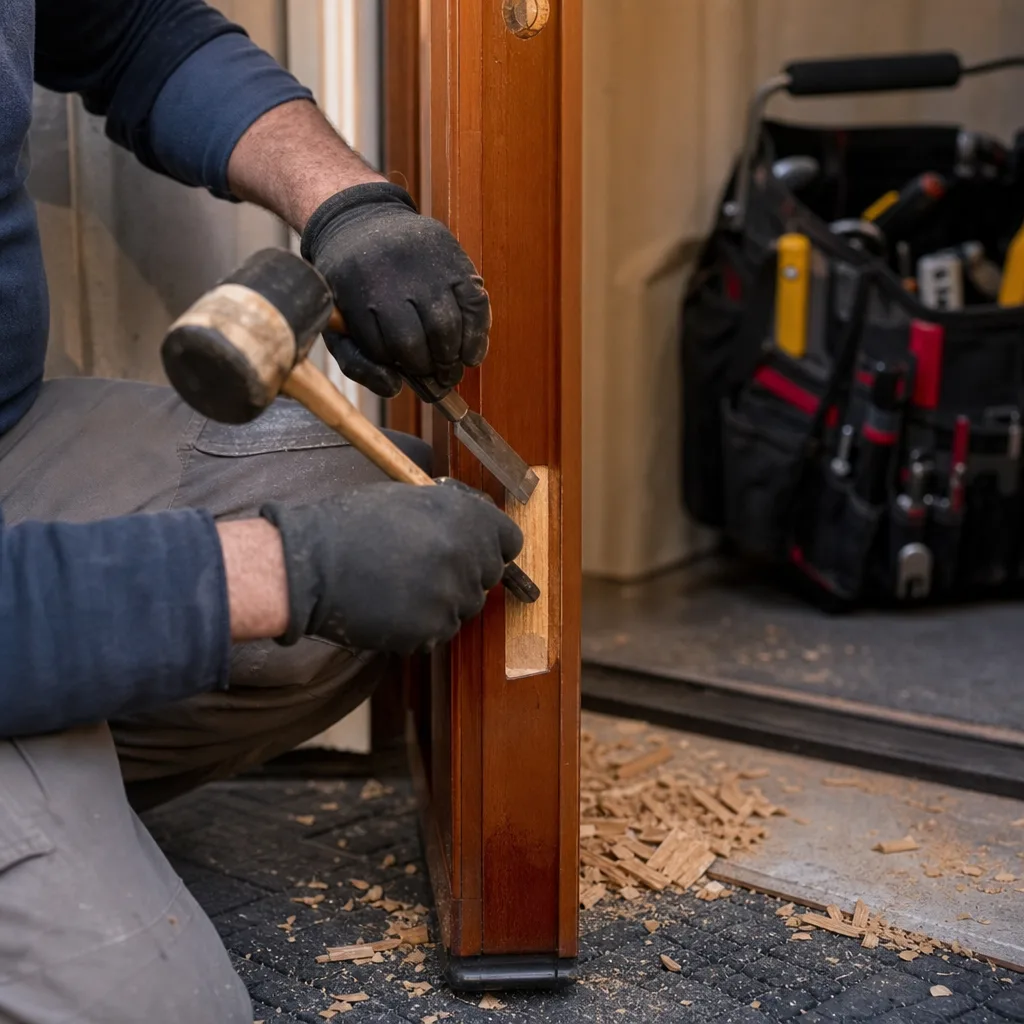
- Allowing drilling without explicit authorization. A competent locksmith picks or bypasses most residential locks without drilling. Drarring destroys the lock and converts a $150 lockout into a $300+ replacement. Drill authorization should be in writing, with explanation of why non-destructive entry failed.
- Ignoring lock grade on replacement quotes. A quote for “new deadbolt installed at $200” without grade specification could mean Grade 3 hardware at Grade 1 labor rates. Always confirm: “What ANSI grade is the hardware?”
- Neglecting key control on multi-user properties. In Manhattan rental buildings, former tenants, dog walkers, cleaning services, and contractors may retain keys. Rekeying every turnover is expensive; high-security key control eliminates the problem at the source.
- Choosing by lowest service call fee alone. The $35 service call is a loss-leader designed to recover margin elsewhere. Total invoice cost is the only valid comparison.
When to Call a Professional
Call a locksmith when you cannot verify who holds keys to your property, when a lock malfunctions or binds, when you’ve experienced a break-in or attempted entry, or when you’re upgrading security after a life change (divorce, roommate departure, property purchase). In Manhattan’s dense housing market, key control is not paranoia - it is standard maintenance.
Novak Lock & Security Manhattan offers free estimates for all residential and commercial work in Manhattan. Every estimate includes written pricing, hardware specifications, and warranty terms before any work is authorized. Call (862) 319-3759 to speak with a live dispatcher, 24 hours daily. For complex security upgrades, we schedule an on-site survey and deliver a detailed scope within 24 hours.
Frequently Asked Questions
Standard residential locksmith services in Manhattan range from $150-$250 for lockouts, $20-$40 per cylinder for rekeying, and $120-$350 per door for lock replacement. After-hours and emergency calls add 50-100% to labor rates. Call (862) 319-3759 for a written estimate with exact pricing for your specific job.
At Novak Lock & Security Manhattan, yes - Haven Standard Clause 1 prohibits any price change between phone quote and invoice. This rule has been in effect since 2002. If a competitor’s quote seems conditional or includes language like “plus materials” or “subject to conditions on site,” the final price is unpredictable by design.
Emergency lockout response in Manhattan typically ranges from 20-45 minutes depending on traffic, time of day, and your specific neighborhood. We quote estimated arrival time when you call, not a callback window. Non-emergency work is scheduled by appointment with a two-hour arrival window.
Rekey if the existing hardware is functional, properly graded for the door location, and you simply need to invalidate previous keys. Replace if the hardware is Grade 3, damaged, mismatched, or insufficient for your security needs. In Manhattan co-op purchases, we often find a mix: rekey the front door and bedroom locks, replace a deteriorated bathroom privacy lock, and upgrade to high-security on the main entrance if the building permits individual cylinder changes.
15-30% over wholesale distributor cost is industry standard, yielding customer prices at or slightly below retail for common items. If a quoted part price exceeds verified retail by more than 25%, ask for the manufacturer, model number, and explanation. At Novak Lock & Security Manhattan, we list all three on every quote and will verify against any competitor’s written estimate at no charge.
New York City requires all locksmiths to hold a license from the Department of Consumer Affairs. Verify any license number at nyc.gov/dca. Unlicensed locksmiths operate illegally and cannot be held accountable for damage or fraud. We provide our license number on request and maintain current documentation for all building management requirements.
The Bottom Line
Manhattan locksmith pricing is readable once you know the four invoice categories and typical 2026 ranges. The service call fee, labor rate, parts cost, and any emergency differential should each be visible and explainable. Lock grade directly affects hardware pricing - Grade 2 is appropriate for most residential applications, with Grade 1 reserved for high-traffic commercial use. Rekeying saves 60-70% over replacement when the existing hardware is sound. High-security cylinders cost more upfront but eliminate recurring rekeying costs where key control matters. And a parts markup within 15-30% of wholesale is standard; anything higher demands justification. The homeowner who understands these line items is structurally protected against the invoice surprises that define this trade. Browse more guides & resources for additional Manhattan-specific security content.
Written by Daniel Novak, Owner at Novak Lock & Security Manhattan, serving Manhattan since 2002.