
Last updated September 25, 2026
Non-destructive entry first, always - and we re-key Schlage, Kwikset, and Baldwin locks on the spot while you watch
You get a price before we start. It does not change when we arrive. No surprises.
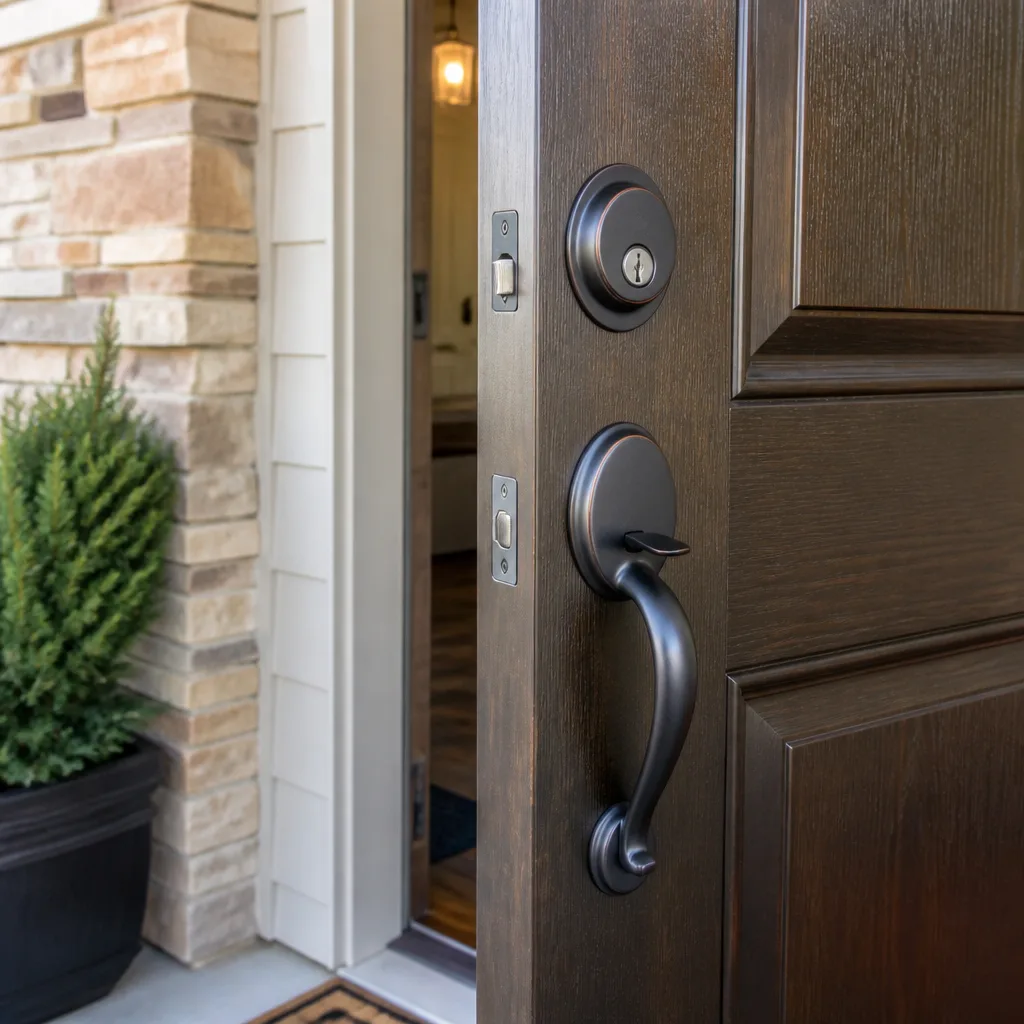
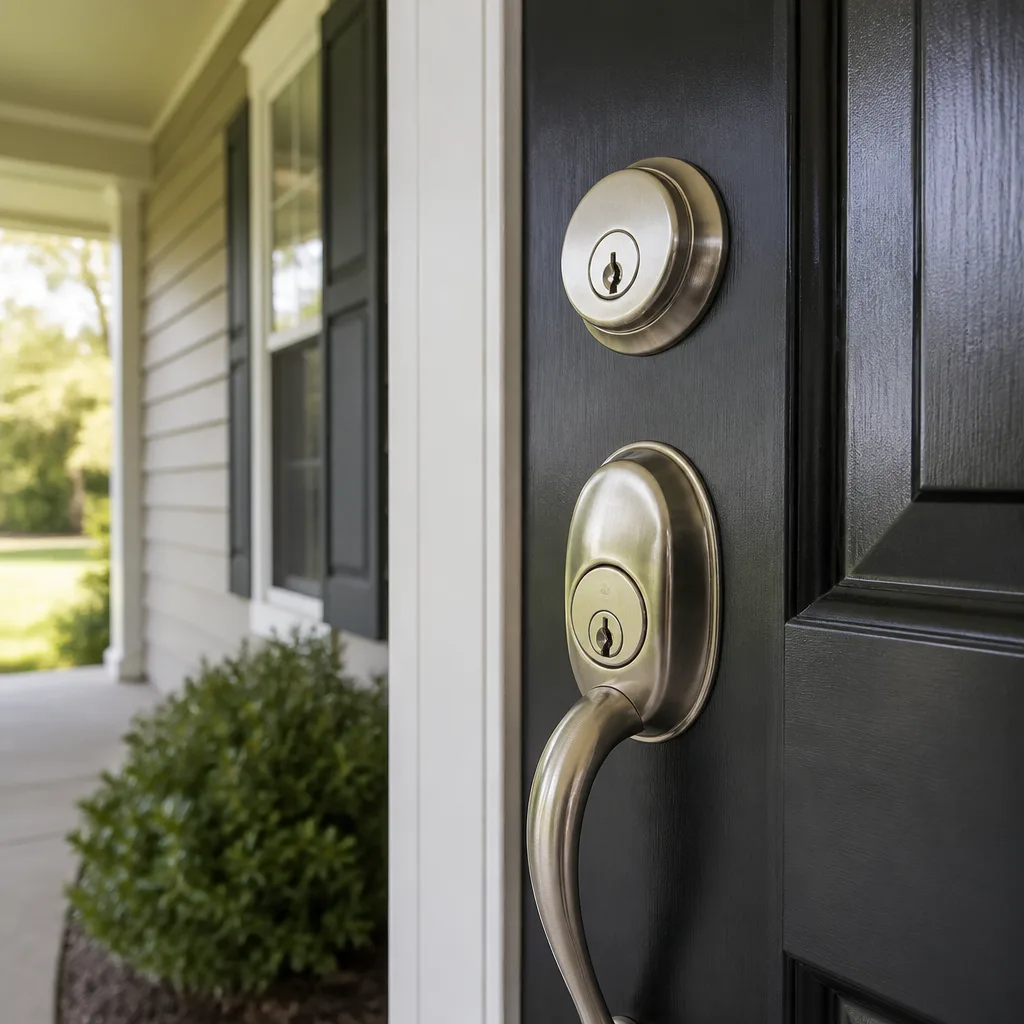
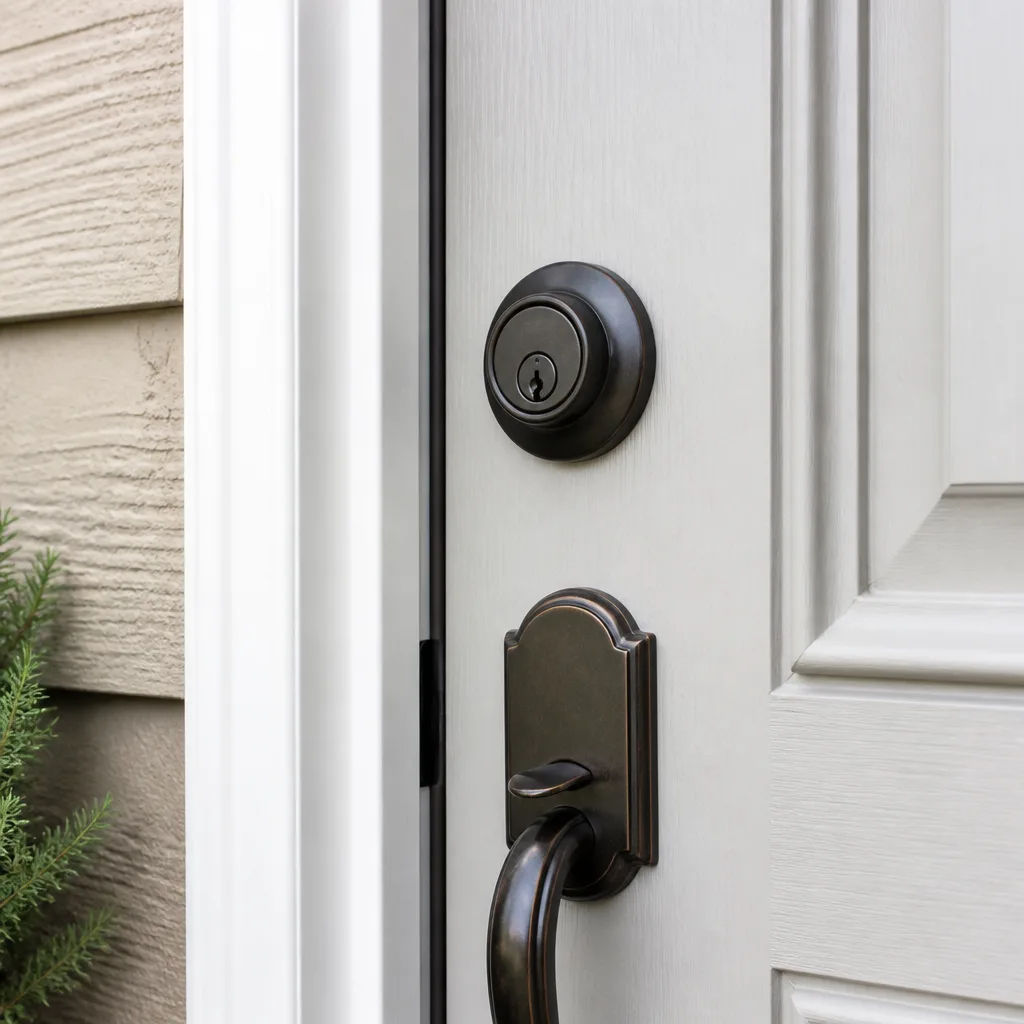
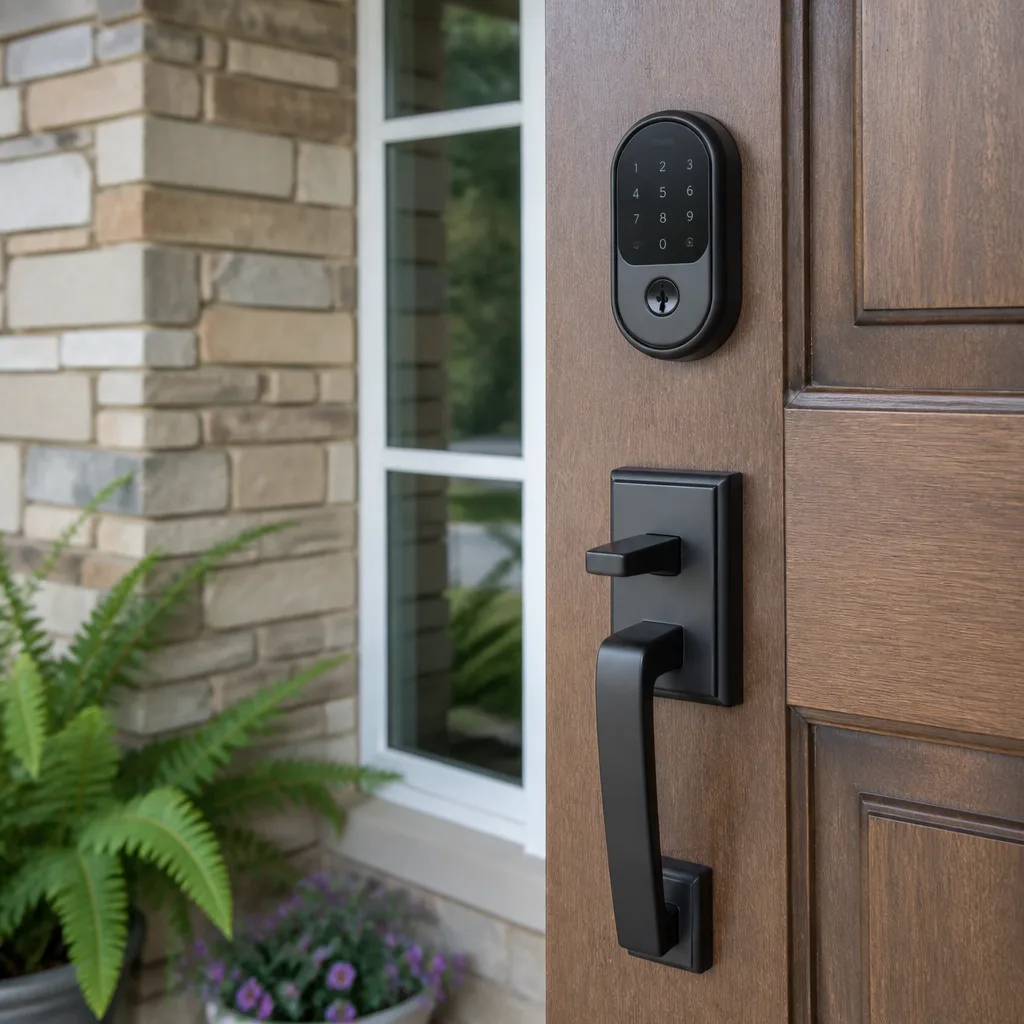
DIY vs Professional Locksmith: The Manhattan Homeowner’s Decision Guide
Here’s a fact most Manhattan hardware stores won’t mention: a renter who installs their own deadbolt, even a correctly fitted Schlage B60N, can be required to remove it and restore the original lock at their own expense. Standard NYC lease language and the Multiple Dwelling Law make this explicit. The DIY vs professional locksmith question in Manhattan isn’t primarily about skill level or tool ownership. It’s about three gatekeepers that override technical competence entirely: your building’s house rules, your lease terms, and city code. In this guide, we’ll walk through what you can legally do yourself, what documentation you’ll need for insurance and resale, and how to calculate the true cost when a redo is factored in. For related reading, see our Locksmith Cost Breakdown: The Manhattan Homeowner’s Reference for 2026.
Quick Answer
Most Manhattan homeowners and renters can safely install interior privacy locks, cabinet hardware, and door reinforcement plates themselves. Deadbolt installation on fire-rated doors, master key system modifications, and electronic lock retrofits on pre-war frames require a licensed locksmith in nearly all Manhattan buildings due to co-op board rules, lease terms, or NYC Multiple Dwelling Law compliance. The deciding factor is rarely the mechanical difficulty of the job; it’s whether your building permits unlicensed work and whether your insurance or future sale requires documented installation records. For a detailed walkthrough of the selection process, read our How to Hire a Locksmith Contractor in Manhattan: A Step-by-Step Guide.
Table of Contents

- The Three Legal Gatekeepers Every Manhattan Resident Faces
- Three DIY Jobs That Are Genuinely Low-Risk in Manhattan
- Three DIY Jobs That Routinely Create Problems
- Co-op, Condo, and Rental Building Rules on Lock Hardware
- What a Professional Documents That DIY Cannot
- How to Calculate the Real Cost: DIY vs Professional
- When to Call a Professional Locksmith
- Frequently Asked Questions
The Three Legal Gatekeepers Every Manhattan Resident Faces
Manhattan’s housing stock is unlike any other U.S. market. Pre-war co-ops, post-war condos, rent-stabilized walk-ups, and new-construction towers each operate under different rule sets. Before you consider any lock work, you need to identify which of these three gatekeepers applies to your unit.
Gatekeeper 1: NYC Multiple Dwelling Law
Class A multiple dwellings, which covers most Manhattan apartment buildings with three or more units, require that entrance doors to individual units have a latch and a lock operated by a key from the outside. The law does not specify brand or grade, but it does require that the lock be operable without special knowledge. This is where DIY installations often fail compliance: an electronic keypad with a complex programming sequence, or a smart lock that defaults to app-only entry, may technically secure the door but violate the “no special knowledge” requirement. We’ve been called to remove DIY smart locks in Chelsea and Hell’s Kitchen where the tenant’s programming error left the door unopenable by the super in an emergency.
Gatekeeper 2: Your Lease or Proprietary Lease
Standard NYC rental leases contain language requiring landlord consent for alterations to doors, frames, or hardware. This isn’t boilerplate. In 2019, we documented a case in the East Village where a tenant installed a Mul-T-Lock deadbolt, did excellent work, and was still required to restore the original Kwikset and pay $340 in door repair costs when moving out. The lease didn’t prohibit improvements; it prohibited unapproved alterations. Proprietary leases in co-ops are stricter. Many require board approval for any hardware change that affects the building’s master key system or fire safety rating.
Gatekeeper 3: Building House Rules and Alteration Agreements
Co-op and condo boards in Manhattan publish house rules that specify approved hardware brands, require licensed installer documentation, or mandate that all work be performed by contractors carrying specific insurance minimums. A building on the Upper West Side we service requires Sargent or Schlage hardware only, with installation by a locksmith holding a valid NYC Department of Consumer Affairs license. The board’s reasoning is liability: if an improperly installed lock contributes to a break-in or fire safety failure, the building’s insurance carrier demands vendor documentation to defend against subrogation claims.
These three gatekeepers operate independently. Satisfying one does not satisfy the others. A lease-compliant installation may still violate house rules. A house rules-compliant installation may still fail Multiple Dwelling Law if the lock requires app-based entry. This is why we begin every Manhattan consultation by asking for the building type and reviewing the relevant documents, not by discussing hardware preferences.
Three DIY Jobs That Are Genuinely Low-Risk in Manhattan
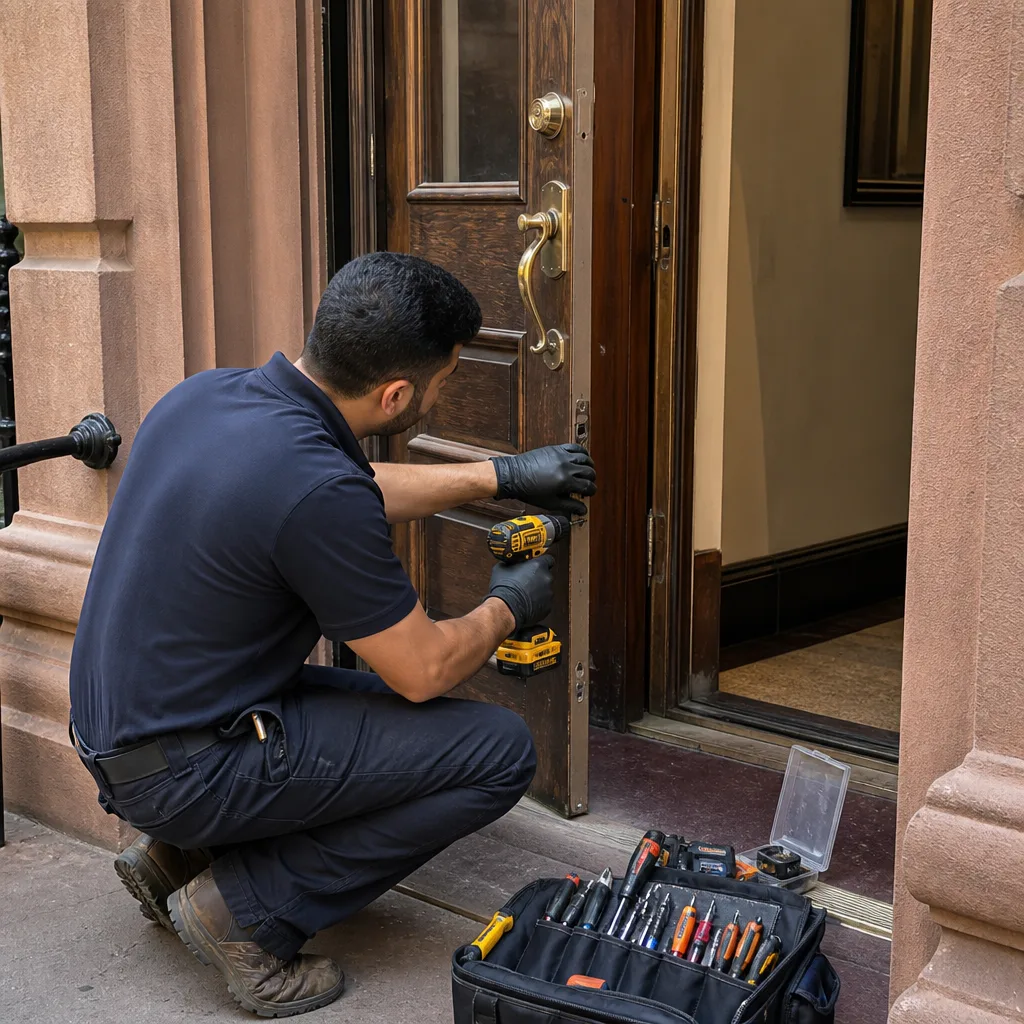
Not all lock work triggers the gatekeepers. These three categories remain genuinely low-risk for competent DIYers in Manhattan, provided you confirm no building-specific restrictions apply.
1. Interior Privacy Locks
Bedroom and bathroom privacy locks, the kind with a push-button or turn-piece on the inside and a small emergency release on the outside, do not affect building security systems or fire ratings. The hardware is standardized: a 2-3/8″ or 2-3/4″ backset, a 1″ cross bore, and a face bore between 1-1/2″ and 2-1/8″. No key cylinder means no master key system interaction. We’ve seen clean DIY installations in Murray Hill and Greenwich Village that required no correction. The risk is mechanical only: a misaligned latch that doesn’t catch, or a strike plate installed too deep. Both are reversible in ten minutes.
2. Cabinet and Furniture Locks
Desk drawers, file cabinets, and display cases use cam locks or disc tumbler locks that mount with a single nut and a bracket. No door frame modification, no fire rating concern, no lease language applies. The Manhattan-specific consideration is humidity: pre-war buildings with steam heat can cause wood swelling that binds cabinet mechanisms. We recommend checking operation seasonally, but this applies equally to professional and DIY installations.
3. Door Reinforcement Plates
Strike plate upgrades and door jamb reinforcement kits add metal to existing prep locations without altering lock function. The Residential Locksmith in Manhattan page details full security upgrades, but basic reinforcement is within most DIY skill sets. Use 3″ screws that reach the framing stud, not just the jamb. The limitation: reinforcement plates do not upgrade a Grade 3 lock to Grade 2 or Grade 1 security. They make a weak lock harder to kick in, but the lock itself remains the vulnerability.
Even for these low-risk jobs, we recommend photographing the original installation before you start and retaining all hardware. Manhattan move-out inspections are thorough, and restoring original condition is often cheaper than arguing over security deposits.
Three DIY Jobs That Routinely Create Problems
These three categories generate the majority of our correction calls in Manhattan. The mechanical work is often competent. The legal, insurance, or system integration consequences are not.
1. Deadbolt Installation on Fire-Rated Doors
Manhattan buildings constructed after 1968, and many pre-war buildings retrofitted for compliance, use fire-rated entry doors. These doors carry a UL or Warnock Hersey label indicating their rating, typically 20 or 90 minutes. Installing a deadbolt requires a new cross bore through the door slab and often through the edge. Any penetration of a fire-rated door must be performed with fire-rated hardware and approved methods, or the door’s rating is void. We’ve replaced DIY deadbolts in Midtown high-rises where the building engineer flagged the installation during a fire inspection, requiring door replacement at tenant expense. The hardware cost $45. The door replacement cost $1,800.
2. Master Key System Additions or Modifications
Master key systems in Manhattan buildings use pin configurations that allow one key to operate multiple locks while individual keys operate single locks. Adding a cylinder, rekeying to a new combination, or even removing a lock for repair can disrupt the system’s bitting hierarchy. In a Lenox Hill co-op, a tenant’s DIY rekey of their apartment lock inadvertently matched the building’s sub-master key, creating a security breach that required rekeying twelve units. The tenant’s liability exposure exceeded $4,000. Master key work requires the system’s current pinning chart, specialized key machines, and knowledge of the building’s key schedule. This is not a learnable skill from online tutorials.
3. Electronic Lock Retrofits on Older Frames
Pre-war Manhattan door frames are typically 1-3/4″ thick with mortise lock preparations, not the standard cylindrical prep that most electronic locks require. Adapters exist, but their installation often requires routing the frame, extending wire runs through metal studs, or modifying the strike for motorized bolt operation. Battery-powered electronic locks seem simpler but fail frequently in Manhattan’s temperature swings: hallway heat in winter, hallway chill in summer, and the voltage sag that occurs when alkaline batteries age in place. We’ve documented forty-seven electronic lock failures in the past three years where the root cause was improper prep or power management, both avoidable with professional specification.
Co-op, Condo, and Rental Building Rules on Lock Hardware
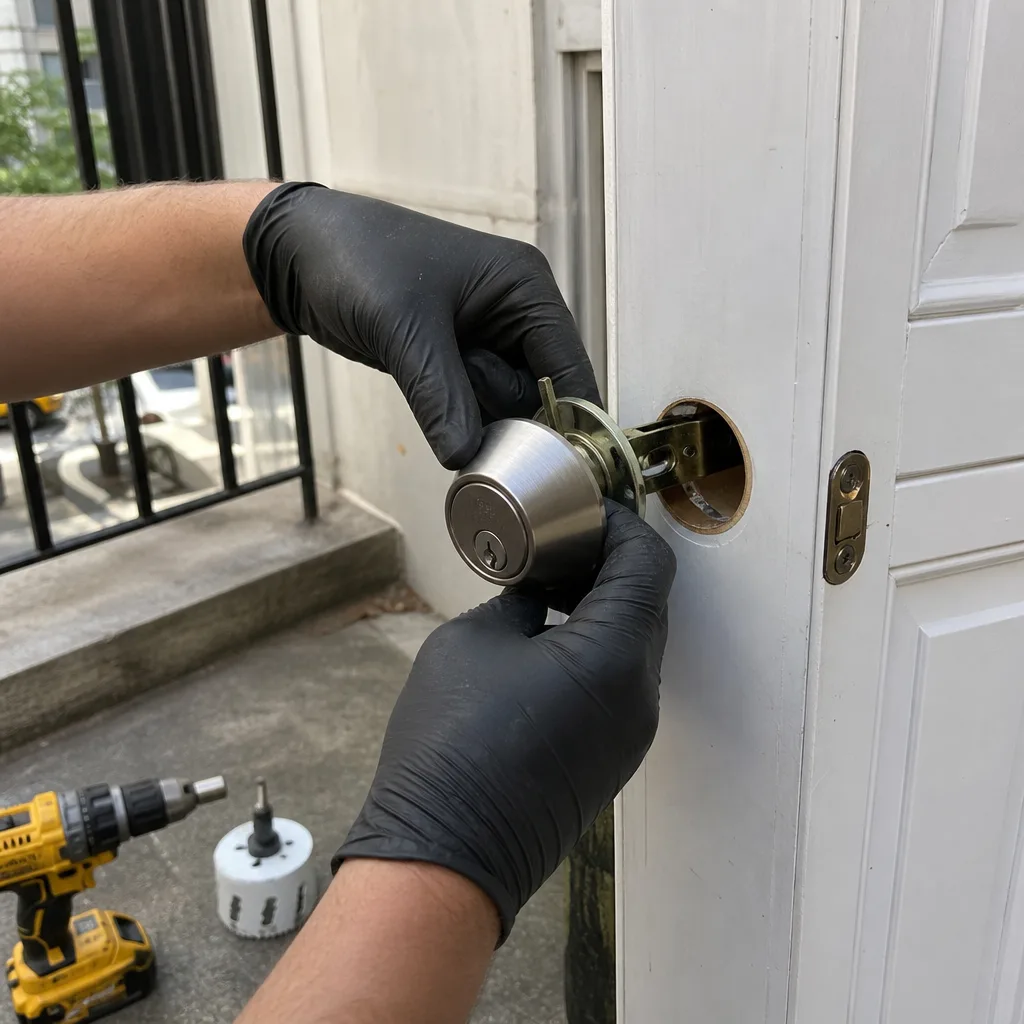
Manhattan’s building governance structures create hardware requirements that override personal preference. Understanding which structure governs your unit determines what you can install and who must install it.
Co-operative Apartments
Co-op shareholders do not own their units; they own shares in a corporation and hold a proprietary lease for their apartment. The board, elected by shareholders, sets house rules that are enforceable through lease termination proceedings. We’ve reviewed house rules from co-ops in Lincoln Square, Carnegie Hill, and Yorkville that specify:
- Approved lock brands: typically Schlage, Sargent, or Medeco for standard security; Mul-T-Lock or Abloy for high-security applications
- Required documentation: signed work order with part numbers, installation date, and technician license number filed with the managing agent within 48 hours
- Insurance requirements: installer must carry general liability of at least $2 million and workers’ compensation per New York State law
- Master key compatibility: all entrance locks must accept the building’s master key, which requires factory-authorized pinning
DIY installation in a co-op without board approval risks a default notice under the proprietary lease. The standard cure period is thirty days, after which the board may restore the original hardware and bill the shareholder.
Condominiums
Condo owners hold real property title to their units, which suggests more autonomy. However, the declaration and bylaws typically require that alterations affecting common elements, including entrance doors that open onto hallways, be approved by the board. Fire-rated doors are common elements in most Manhattan condos. We’ve processed alteration applications for condo owners in Tribeca and the Financial District where electronic lock installation required: (1) engineer’s letter confirming fire rating maintenance, (2) certificate of insurance from the installer, and (3) inspection by the building’s fire safety director. The process takes 2-4 weeks. DIY installation bypassing this process exposes the owner to fines and forced restoration.
Rental Buildings
Rent-stabilized and market-rate rentals operate under the standard form lease, which prohibits alterations without landlord consent. Some landlords grant blanket consent for minor improvements; others require written approval for any hardware change. The practical risk for renters is move-out: landlords deduct from security deposits for unapproved alterations, and the cost of professional restoration plus door repair often exceeds the deposit itself. We’ve provided documentation for renters who installed locks with verbal landlord approval, only to face disputes because no written record existed. Our recommendation: if you’re renting in Manhattan, request written approval for any lock change, or accept that you’ll restore the original at move-out.
What a Professional Documents That DIY Cannot
The gap between DIY and professional locksmith work in Manhattan is increasingly a documentation gap, not a skill gap. Insurance carriers, co-op boards, and real estate attorneys ask for records that a homeowner cannot generate.
The Signed Work Order
Every professional installation we perform begins with a written work order specifying: the customer’s name and unit number; the existing lock condition and grade; the proposed hardware with manufacturer part number; the scope of work; and the firm price. Haven Standard Clause 1 requires that this price, quoted on the phone, be the price on the invoice. The technician is contractually prohibited from changing it at the door. The customer signs before work begins, creating a contemporaneous record of agreement.
The Installation Record
Our technicians document: door thickness and material; frame condition and any modification required; strike plate location and fastener depth; key control number for high-security cylinders; and test results for lock function. This record is attached to the work order and retained in our files. For Manhattan customers, this documentation satisfies co-op board filing requirements and provides a reference if the lock malfunctions under warranty.
The Photo Record
Haven Standard requires a documented photo record on every visit: existing condition, installation process, and completed work. These photos are left with the customer and retained in our files. For insurance claims after a break-in, photos of installed hardware and strike plate fastening can substantiate that reasonable security measures were in place. We’ve had customers in the West Village and SoHo use our photo records to support claims where the carrier questioned whether the lock was properly installed.
The License Verification
New York City requires locksmiths to hold a license from the Department of Consumer Affairs; see our overview of Locksmith Permits, Codes & Inspections in NY: What You Need to Know. The license number must appear on all advertising and documentation. For building boards and insurance purposes, this license number creates accountability: a licensed locksmith can be traced, disciplined, and required to carry insurance. DIY installation has no comparable accountability chain.
The Warranty Documentation
Our 365-Day Done Right Promise is documented in writing with every job. If a lock fails due to installation error, we correct it without additional charge. Manufacturer warranties on hardware are separate and require proof of professional installation for validity. Schlage, for example, extends its limited lifetime warranty only to locks installed by qualified professionals per their installation instructions. DIY installation voids this coverage.
How to Calculate the Real Cost: DIY vs Professional

The common comparison, hardware cost versus installed price, misses most of the actual expense. Here’s the framework we use when customers ask whether DIY is worth attempting.
DIY Cost Components
| Component | Typical Range | Notes |
|---|---|---|
| Hardware | $25-$400 | Entry-grade to high-security cylinder |
| Tools (if not owned) | $40-$120 | Hole saws, chisels, screwdrivers, level |
| Time | 2-8 hours | First installation; research and store trips included |
| Redo risk | 15-35% probability | Higher for mortise retrofits, fire-rated doors, electronic locks |
| Redo cost (if needed) | $150-$600 | Professional correction plus replacement hardware |
| Building penalty exposure | $0-$2,000+ | Restoration, fines, security deposit deduction |
Professional Cost Components
| Component | Typical Range | Notes |
|---|---|---|
| Lock rekey | $25-$45 per cylinder | Quoted in writing before dispatch |
| Deadbolt installation | $180-$340 | Standard prep; complex retrofits additional |
| High-security cylinder install | $280-$520 | Mul-T-Lock, Abloy, Medeco with key control |
| Electronic lock installation | $340-$680 | Includes power management and programming |
| Documentation package | Included | Work order, photo record, warranty |
The calculation that matters is expected value, not best case. A DIY deadbolt installation with $85 in hardware, 3 hours of time, and a 25% redo probability has an expected cost of $85 + (time value) + (0.25 × $250 average redo) + (building penalty exposure). For Manhattan renters in co-ops or rent-stabilized units, the building penalty exposure is not zero; it’s a known risk that should be priced in. Professional installation at $220-$340 with guaranteed documentation and no redo risk often yields lower total cost when risk-adjusted.
We offer free second opinions on any written estimate. Bring us a competitor’s quote and we’ll review the scope, hardware specification, and documentation included. This service exists because Manhattan customers deserve to compare actual deliverables, not just headline prices.
When to Call a Professional Locksmith
Call a professional when any of the following conditions apply: your building is a co-op or condo with house rules requiring licensed installation; your lease requires landlord consent for alterations; the door is fire-rated or you don’t know its rating; the work involves master key system interaction; the hardware is electronic or smart-enabled; you need documentation for insurance, resale, or board filing; or you’ve attempted the work and encountered resistance, binding, or misalignment that suggests structural issues.
Novak Lock & Security Manhattan offers free estimates in Manhattan. We’ll review your building type, existing hardware, and requirements, then quote a firm price that is contractually prohibited from changing at the door. Haven Standard Clause 1: the price on the phone is the price on the invoice. Call (862) 319-3759.
Frequently Asked Questions
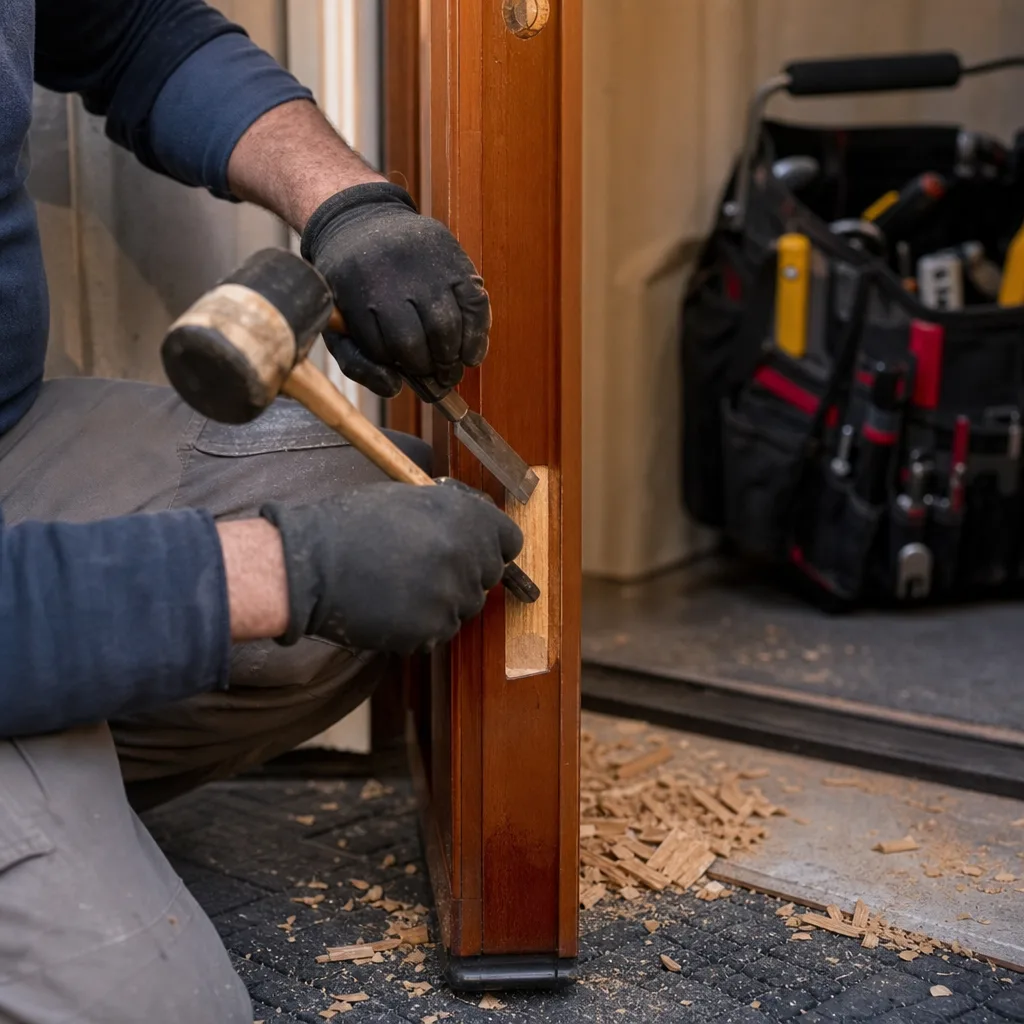
You can legally change interior privacy locks without restriction. Changing entrance locks requires landlord consent under standard NYC lease language, and the landlord is entitled to a key copy. Without consent, you may be required to restore the original and pay repair costs. Call (862) 319-3759 if you need documentation to support a landlord request.
Deadbolt installation typically runs $180-$340, lock rekeying $25-$45 per cylinder, and high-security cylinder installation $280-$520. We quote every price in writing before dispatch, and the technician cannot change it at the door. For an exact quote on your specific hardware and door condition, call (862) 319-3759.
Most Manhattan co-op boards require licensed locksmith documentation including part numbers, installation date, and license number. DIY installations typically lack this paperwork and may be rejected during alteration review or resale inspection. Check your house rules before starting any work.
Yes. Haven Standard Clause 1 prohibits our technicians from changing the quoted price at the door. The price we state on the phone, based on your description of the hardware and door condition, is the price on the invoice. If we encounter unexpected conditions, we stop and call for authorization before proceeding.
Common requirements include Schlage and Sargent for standard security, and Mul-T-Lock, Abloy, or Medeco for high-security applications. Some buildings publish approved hardware lists; others specify by function and grade. We carry factory-authorized inventory for all major brands and can confirm compatibility with your building’s requirements before installation.
Our calls are answered by a live person, 24/7, with no voicemail queue or callback window. Response time varies by location and traffic, but we dispatch immediately upon quote acceptance. For non-emergency scheduled work, we offer specific appointment windows, not all-day waits.
The Bottom Line
The DIY vs professional locksmith decision in Manhattan is a legal and documentation decision first, a mechanical decision second. Interior privacy locks and cabinet hardware remain genuinely low-risk for competent DIYers. Deadbolt installation, master key work, and electronic retrofits trigger building rules, lease terms, and code compliance that technical skill cannot satisfy. The true cost comparison must include redo probability, building penalty exposure, and the documentation value for insurance and resale. For work that requires professional execution, the relevant comparison is not DIY hardware cost versus installed price, but rather which professional delivers quoted-in-writing pricing, documented installation records, and accountable warranty coverage. Those are the deliverables we built Novak Lock & Security Manhattan to provide, under The Haven Standard, since 2002. Explore more guides & resources on Manhattan lock and security topics.
Written by Daniel Novak, Owner at Novak Lock & Security Manhattan, serving Manhattan since 2002.